
About peacemaking_mauda

This author has not yet filled in any details.
So far peacemaking_mauda has created 51 blog entries.

A Framework for Understanding Tribal Courts and the Application of Fundamental Law

A Framework for Understanding Tribal Courts and the Application of Fundamental LawThrough an examination of scholarly articles, this paperdiscusses traditional tribal justice systems set in tribal communities. This effort establishes a framework for  understanding tribal courts and the unique challenges they face.Read the full scholarly article by April L. Wilkinson in Volume 15 of the
15th National Indian Nations Conference (December 8-10, 2016)

15th National Indian Nations Conference (December 8-10, 2016)15th National Indian Nations ConferenceDecember 8-10, 2016, Agua Caliente/Palm Springs, CA.“Harnessing our Collective Wisdom: Strengthening the Circle of Safety, Justice and Healing.”The largest U.S. Department of Justice sponsored Indian Nations conference, brings together Native American victims, victim advocates, tribal leaders, victim service providers, community volunteers, prosecutors, judicial and

NAICJA Meeting (October 18-20, 2016, California)

NAICJA Meeting (October 18-20, 2016, California)National American Indian Court Judges Association Meeting – October 18 through October 20, 2016, at Morongo Resort & Casino. The meeting featured three events involving the Indigenous Peacemaking Initiative:IPI Advisory Committee Meeting (In-Person), October 18 (photo after the meeting) Pictured are (seated, l-r): David Raasch (Stockbridge Munsee), Natasha Gourd (Spirit

Organized Village of Kake Circle Peacemaking

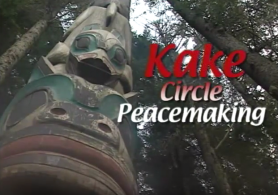
Organized Village of Kake Circle Peacemaking(video from Tribal Access to Justice Innovation)Tribal Materials:Keex’ Kwaan Judicial Peacemaking Code of the Tribal Court of the Organized Village of KakeProvides authorization and place in the clan system, referral standards, procedures, juvenile matters, and a Peacemaker Appellate Court.Kake Peacemaking Handbook. 2005.Articles and Profiles:The particular method of conflict resolution presented

Pokagon Band of Potawatomi Advanced Training (Sept. 21-23, 2016)

Pokagon Band of Potawatomi Advanced Training (Sept. 21-23, 2016)Advanced Peacemaking TrainingSeptember 21-23, 2016, at the Pokagon Band of Potawatomi Indians in Dowagiac, MIThe Indigenous Peacemaking Initiative, with several advisory committee members will be providing a private advanced peacemaker training for community members, tribal officials, and staff at the Pokagon Band of Potawatomi Indians in Dowagiac,

Report on Holistic and Traditional Justice Roundtable

Report on Holistic and Traditional Justice RoundtableThis publication provides a detailed description of the “Holistic & Traditional Justice Roundtable” held in Albuquerque, New Mexico, on November 13, 2015 (see Appendix B). More than 24 Indian Law experts attended the Roundtable and participated in a full day discussion, which yielded considerable insights on holistic and traditional

Tlingit & Haida: Tribal youth court could launch in a few weeks

Tlingit & Haida: Tribal youth court could launch in a few weeksAbout 30 tribal officials and community members recently discussed ways to get a new youth court up and running in Juneau. It’s an opt-in program for youth tribal members in Southeast Alaska that’s an alternative to the regular justice system.Read the full story at the KTOO

Restorative Justice Returning to Tulalip Courthouse

Restorative Justice Returning to Tulalip Courthouse What’s the surefire way to stop a behavior? Punish it, right? From schools, to workplaces, animal training to penitentiaries we see examples everywhere. Obviously, punishment works or we wouldn’t keep doing it. Except, in some cases, common wisdom is entirely wrong. Punishment doesn’t work, as evidenced by the number

There Is Hope: Time to Follow an Indigenous Model for Peace in America

There Is Hope: Time to Follow an Indigenous Model for Peace in AmericaI’m a disciple of John Mohawk, a dearly departed Seneca philosopher and professor.  He introduced me to the Great Law, a model for peacemaking and peacekeeping amongst warring nations—communities where there is a genuine divide.  I’m simply going to quote his 2004 take

Midwest Peacemaking Conference (June 8-10, 2016)

Midwest Peacemaking Conference (June 8-10, 2016)Midwest Peacemaking Conference.June 8-10, 2016 at Manistee, MichiganHosted by the Little River Band of Ottawa Indians Peacemaking, this conference features three days of session including "Listening and Talking: The Core of Conflict Resolution," Putting Peacemaking in Context," "Institutionalizing Peacemaking in State Courts," and "Peacemaking in Public Schools."Download the event schedule.

New tribal court programs aim to reduce recidivism

New tribal court programs aim to reduce recidivism Two new tribal court programs are getting off the ground at Central Council Tlingit and Haida Indian Tribes of Alaska. They’re focused on reducing recidivism.It’s part of a larger conversation to identify what’s holding some people back from reaching their potential. Namely, things such as childhood trauma, unstable home lives

Northeast Regional Peacemaking Training (May 3-4, 2016)

Northeast Regional Peacemaking Training (May 3-4, 2016)Northeast Regional Peacemaking Training.May 3-4, 2016 at Niagara Falls, New YorkThe National American Indian Court Judges Association, the Native American Rights Fund, and Columbia Law School offer this training that reviews foundational principles of peacemaking, peace circles, and traditional dispute resolution. One full day will be devoted to experiential

DWI court’s treatment program promotes Native culture

DWI court's treatment program promotes Native culture ALBUQUERQUE — Inside the busiest courthouse in New Mexico, Arnett Tafoya stood in the same courtroom where he had appeared numerous times after being charged last year with drunken driving.This time, things were different. There was cake on a table, and Bernalillo County Judge Maria Dominguez praised Tafoya for

The Indian Child Welfare Summit (Dec 7-9, 2015)

The Indian Child Welfare Summit (Dec 7-9, 2015)The Indian Child Welfare SummitDec 7-9, 2015 at St. Paul, MinnesotaThis 2-1/2 day conference, co-sponsored by the Mesa Grande Band of Mission Indians Economic Development Authority/Tribal Enterprises, the Native American Rights Fund (NARF), the National American Indian Court Judges Association, and Columbia Law School, will cover new ICWA

New joint tribal-state court established

New joint tribal-state court established For the first time in Alaska, there will be a joint tribal-state court. A Kenaitze tribal judge will sit side-by-side with a state judge and have equal say in decisions. It will be a wellness court that hears criminal cases involving substance abuse, and will start taking up to 20 participants

Robert Yazzie, Chief Justice Emeritus, Navajo Nation

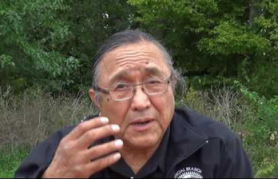
Robert Yazzie, Chief Justice Emeritus, Navajo NationJustice Yazzie has written extensively on peacemaking processes and applications including articles on Healing as Justice, Navajo Restorative Justice, Peacemaker Courts and Violence Control Plans, and Navajo Peacemaking: Technology and Traditional Indian Law.Video from Pokagon Band of Potawatomi Peacemaking Training (September 2016)

Two Peacemaking Trainings in October 2015

Two Peacemaking Trainings in October 2015October 27-29, 2015 - Training: Basics of Peacemaking (Pine Ridge Reservation): Two one-day trainings for local community members interested in traditional dispute resolution as an alternative to courts.October 20-21, 2015 - Peacegiving Training (CTCLUSI Community Center): Free three-day training for peacegivers/peacemakers that covers history and types of peacemaking and various

Tribal courts have lessons for children’s courts, judges’ panel says

Tribal courts have lessons for children’s courts, judges’ panel says SANTA FE, N.M. — Peacemaking practices used in indigenous American cultures can have a place in courts dealing with child abuse and neglect within tribes and in nontribal courts, says a new national panel that includes two local judges.Read the full September 4, 2015, article at

When Justice Doesn’t Work: A NARF Attorney on Restoring the Circle

When Justice Doesn’t Work: A NARF Attorney on Restoring the CircleMost Americans can turn to the courts for remedies to injustice. However, the mainstream justice system may not provide comfortable solutions, and sometimes isn’t even available, for Native people, said Brett Lee Shelton, an Oglala Lakota attorney with the Native American Rights Fund, a nonprofit

Funding Opportunity: Safety and Justice Challenge (March 2015)

Funding Opportunity: Safety and Justice Challenge (March 2015) (FUNDING OPPORTUNITY)DUE DATE: March 31, 2015The MacArthur Foundation has announced a five-year $75 million investment in a major new initiative called the Safety and Justice Challenge, to address over-incarceration by changing the way America thinks about and uses jails.   Core to the Challenge is a competition that

Go to Top